
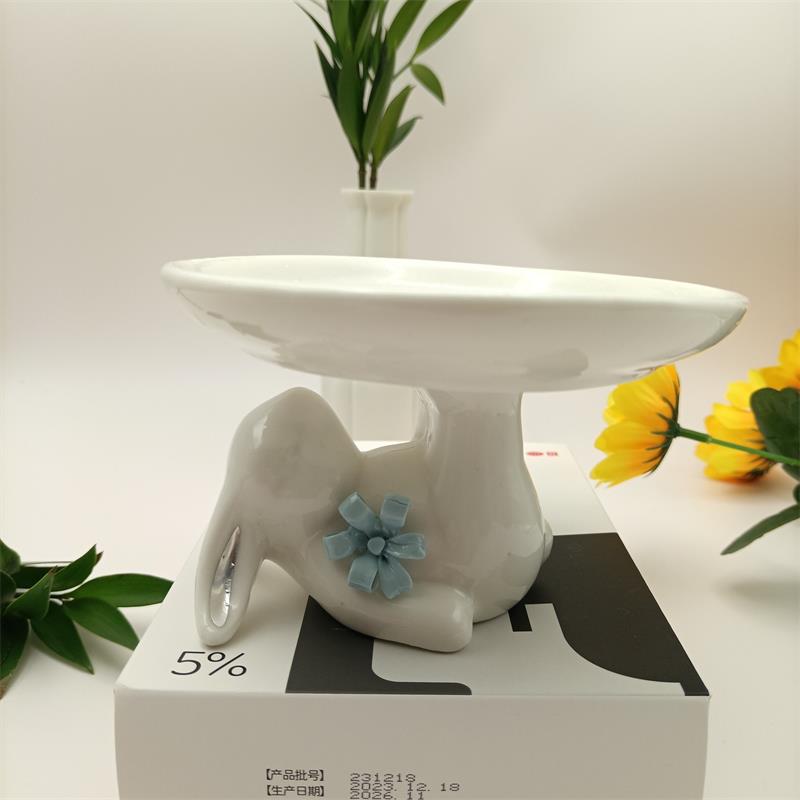
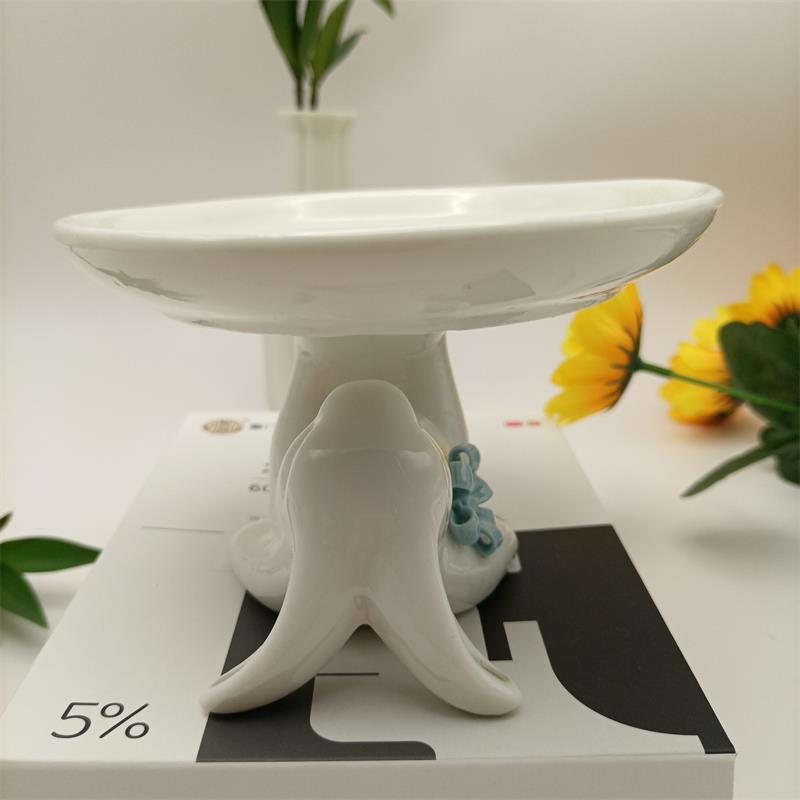
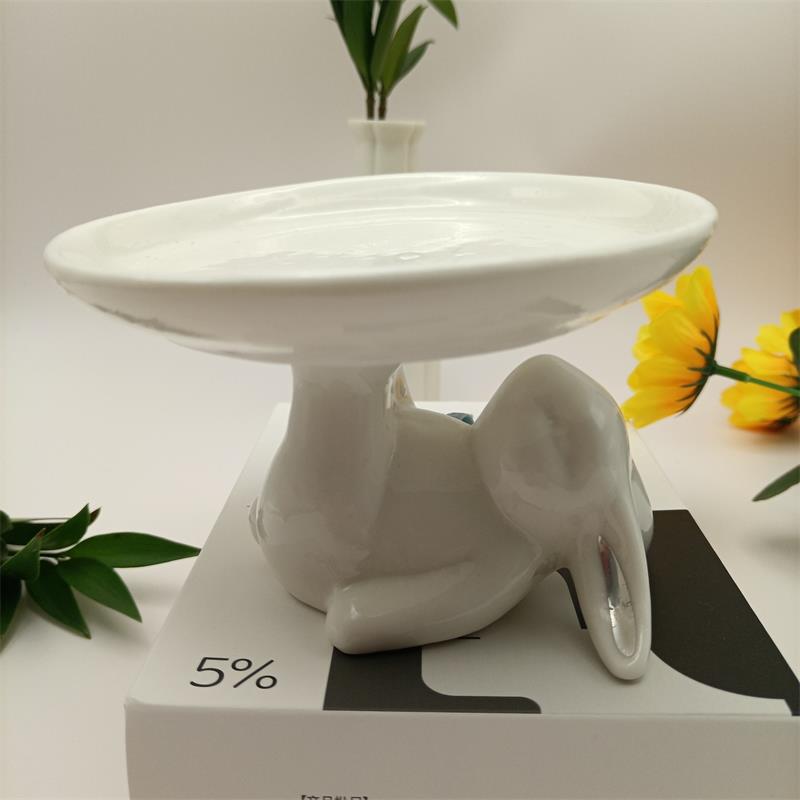
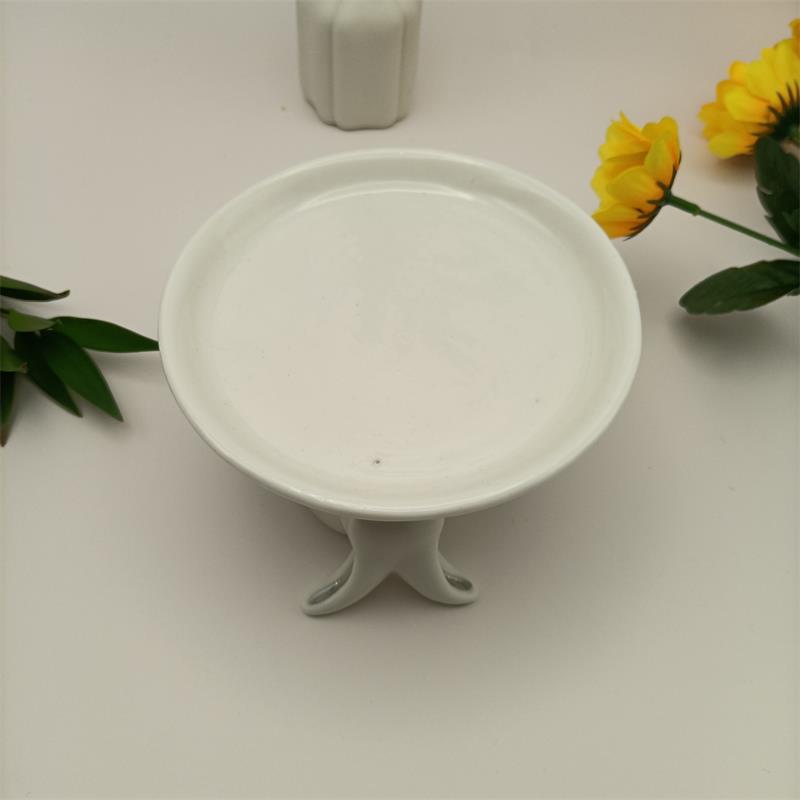
Ceramic Rabbit Cake Tray – A Heartwarming Home Accent Gift
The Little Rabbit Who Kicks Joy Into Every Room
Some objects arrive in a home quietly, without ceremony. They sit on a shelf, wait on a counter, and slowly become part of the rhythm of daily life. The idea behind this ceramic rabbit tray began with a simple observation: the happiest rooms are rarely the most perfectly styled ones. They are the rooms where small, playful things are allowed to stay — a stone from a beach walk, a chipped mug that no one can bear to throw away, a figurine that makes someone smile every time they pass it. That is the spirit this little rabbit was made to carry.
The story starts with a rabbit who could never sit still. In the imagination of the studio that shaped it, this rabbit was not the kind to nibble clover in a quiet meadow. It was the one who kicked its hind legs mid-hop, sent a puff of dust into the air, and landed with a satisfied little thump. That kick is frozen into the design — one foot extended, ears tipped back, body caught in that joyful moment between ground and air. The tray it carries is not an afterthought but the punchline: a shallow, gently curved dish that seems to have landed exactly where the rabbit intended, ready to hold whatever the day brings.
Crafted in ceramic, the piece has a weight and presence that plastic imitations cannot match. The glaze is smooth and cool to the touch, with a subtle sheen that catches afternoon light and softens it. Look closely and you will notice the quiet irregularities that come from a kiln rather than a mold pressed in a factory — a slight variation in the glaze pooling, a gentle curve where the tray meets the rabbit’s paws. These are not flaws. They are the fingerprints of a handmade object, the reason no two pieces feel exactly alike. The ceramic body is sturdy enough for everyday use yet refined enough to sit on a display shelf without apology. It measures roughly the size of a dinner plate in its tray span, light enough to lift with one hand but substantial enough to feel like something that will last for years.
In daily life, the rabbit finds its place in more rooms than you might expect. On a kitchen counter, it holds a small batch of cupcakes for a weekend afternoon, or a handful of fruit washed and left to dry. On a dining table, it becomes the centerpiece that guests reach toward without being asked, a dessert tray that invites second helpings and lingering conversation. In a living room, it moves to the coffee table and collects keys, rings, and the small pocket items that otherwise scatter. On a hallway console, it holds a candle and a few sprigs of dried eucalyptus, turning an empty stretch of wall into a small moment of welcome. As desk decor, it catches paper clips and a stray pen, bringing a bit of warmth to a workspace that otherwise runs on screens and deadlines.
But the rabbit’s real talent is for occasions that carry meaning. Think of a housewarming where the gift should feel personal rather than practical. Think of a grandmother who has everything, and for whom a small, cheerful object on her kitchen windowsill means more than another scarf. Think of a collector who has spent years gathering handmade ornaments and decorative table sculptures, always looking for the one piece that feels like it has a story. This rabbit fits all of those moments. It is a keepsake gift in the truest sense — not something stored in a box, but something that stays out, in view, doing quiet work every day.
For families, it becomes part of the small rituals. The tray that holds the birthday cupcakes. The dish where the holiday cookies land. The spot where a child leaves a drawing folded into a square, knowing it will be safe there. Over time, the rabbit stops being a new object and becomes part of the household’s memory, the way a favorite chair or a particular lamp does. Guests learn to look for it. Someone eventually asks where it came from. The answer is always the same: it was a gift, or it was found, and it stayed.
For those who buy it as a memorial piece, the meaning shifts but does not weaken. A rabbit on a tray can hold a small collection of shells from a shared trip, or a single dried flower from a garden someone loved. It does not announce its purpose. It simply waits, steady and warm, offering a place for remembrance without demanding anything in return. That restraint is what makes it a good keepsake — it holds memory the way a good shelf holds a book, quietly and without fuss.
As home decor, the piece works across styles. In a minimalist room, its clean ceramic lines and single playful gesture keep it from feeling busy. In a cottage-style kitchen, it looks as though it has always been there. On an aesthetic shelf display, it pairs naturally with books, small plants, and other handcrafted ornaments, giving the eye a place to rest. The neutral glaze means it does not fight with other colors or materials; it simply adds a touch of life to wherever it lands.
What makes the rabbit worth keeping is not any single feature but the way it combines usefulness with feeling. It is a serving tray when you need one, a decorative table sculpture when you do not, and a small daily reminder that rooms are better when something in them is a little bit playful. It does not ask to be the center of attention. It sits, foot extended, ready to kick a little joy into the room the moment someone walks past. That is the kind of home accent that earns its place — not by being loud, but by being loved. And that is exactly the kind of gift worth giving, whether to someone else or to the rooms you call your own.
Leave Your Message
Related PRODUCTS
-
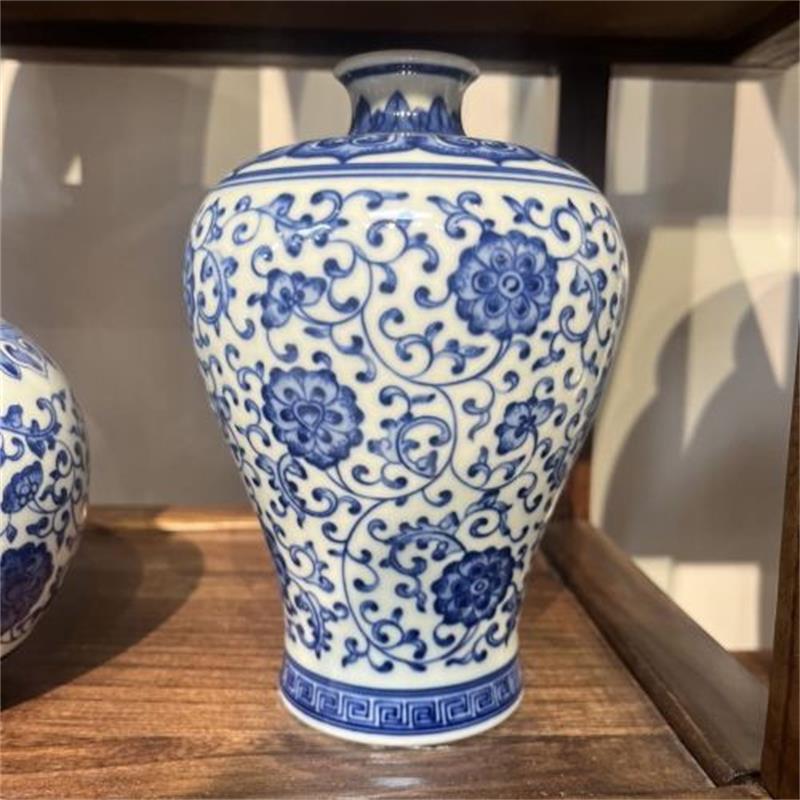
Hand-Painted Ceramic Plum Lotus Vase | Artisanal Decor
-
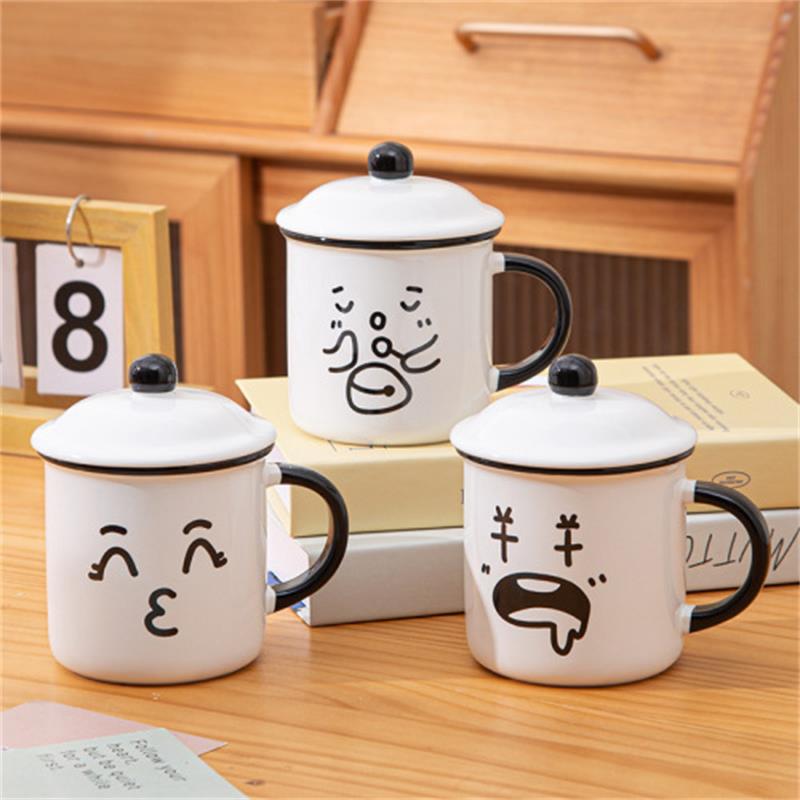
Quirky Ceramic Mug with Lid | Fun Unique Gift & Desk Decor
-
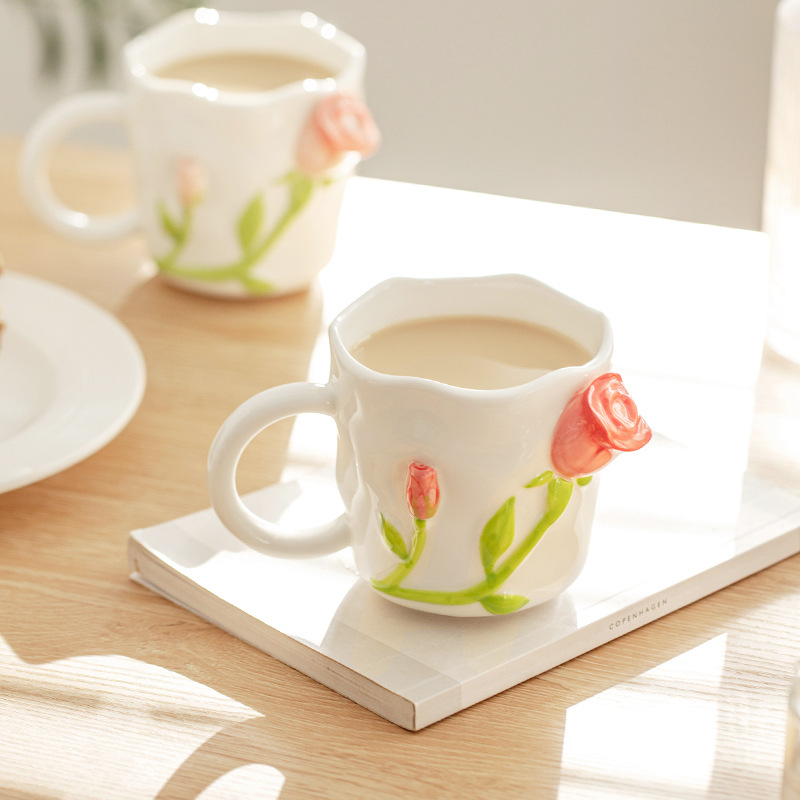
Handcrafted Rose Relief Ceramic Mug | Gift & Home Decor
-
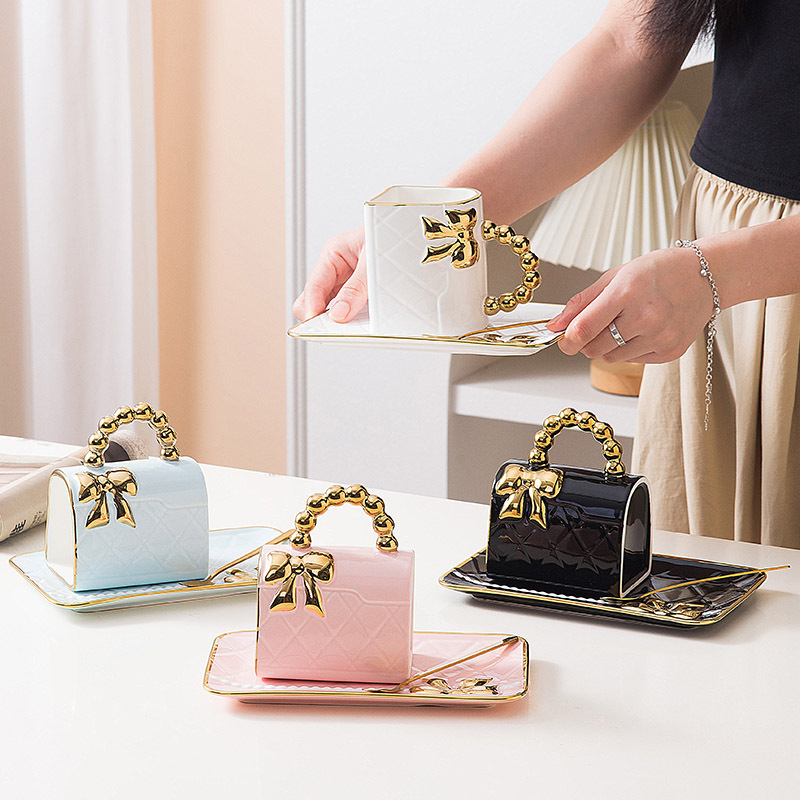
Handcrafted Ceramic Bow Bag Mug | Cozy Home Decor Gift
-
Fruit-Patterned Ceramic Mug | Handcrafted Cozy Home Decor
-
Handcrafted Santa Ceramic Mug | Cozy Home Decor & Gift