
Handcrafted Rose Relief Ceramic Mug | Gift & Home Decor
Every so often, a small object arrives in a home and quietly changes the rhythm of a morning. It doesn’t announce itself. It simply sits on the windowsill, catches the early light, and waits to be noticed.
That was the idea behind this ceramic mug — not a loud centerpiece, but a companion for slow mornings. The kind of morning where the kettle takes its time, where the light comes in low and warm, and where a cup of tea is less about caffeine and more about a few unhurried minutes before the day begins. The rose in relief on its side was never meant to shout. It was meant to be found.
The inspiration came from an old garden rose — the kind that grows against a brick wall and blooms a little later than everything else, as if it knows something the rest of the garden doesn’t. There is a particular softness to a rose that isn’t trying to impress anyone. Its petals don’t need to be perfectly arranged. They simply unfold, one layer at a time, and the shape they make is honest. That honesty is what the maker wanted to carry into clay.
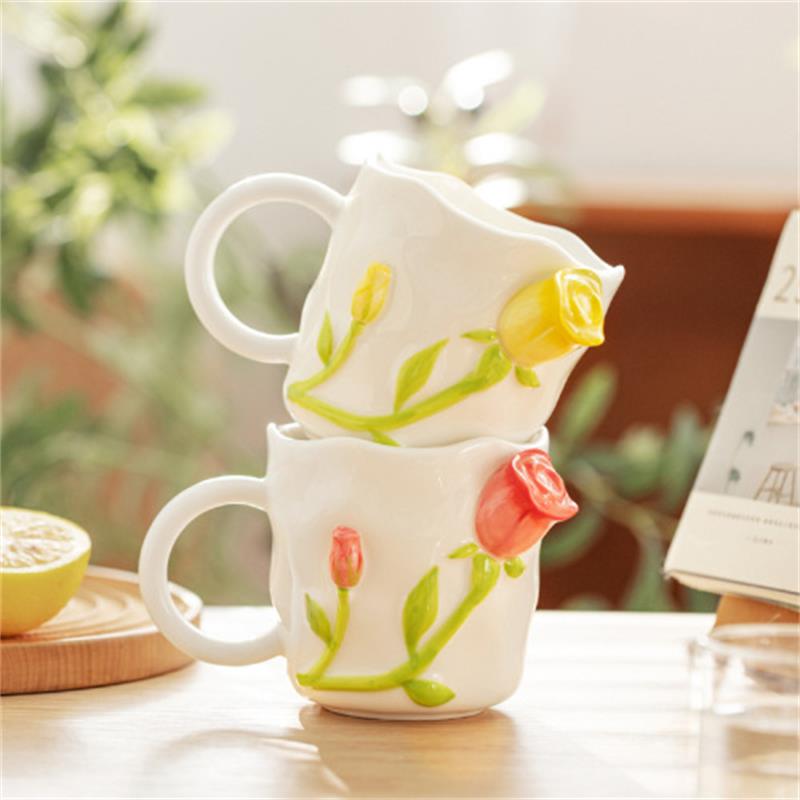
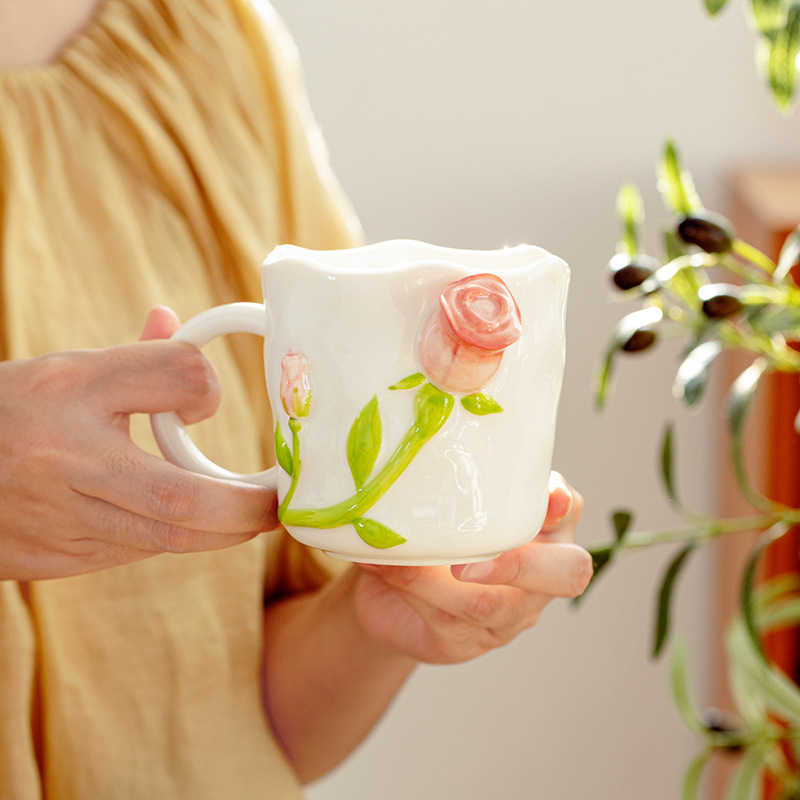
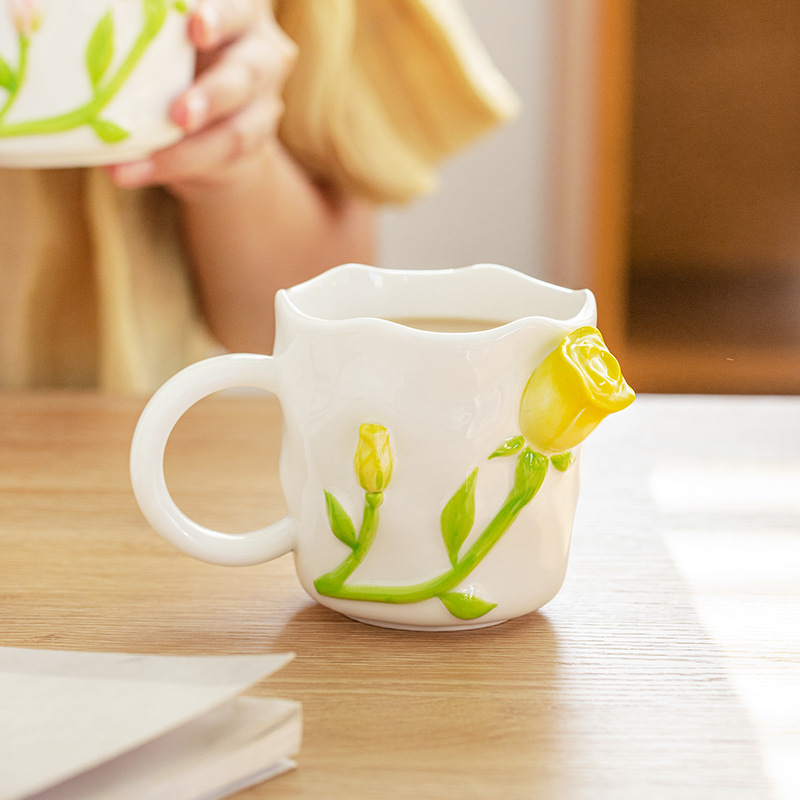
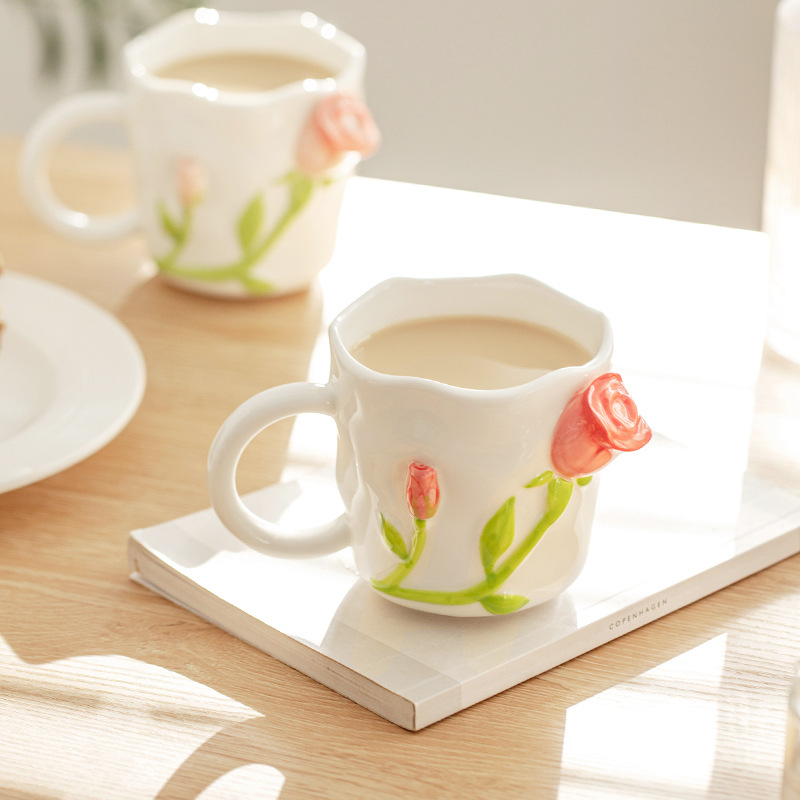
So the rose on this mug is not printed, not painted on in flat color, but raised in relief — sculpted so the petals lift slightly from the surface of the ceramic, catching shadow and light as the day moves across the room. Run a fingertip across it and you feel the edges of each petal, the slight dip at the center, the gentle curve where one layer meets the next. It is a small thing to notice, but it rewards noticing.
The body of the mug is ceramic, finished in soft glazes that keep the palette quiet: a dusty pink that leans toward blush rather than bubblegum, a warm butter yellow that feels like late afternoon, and a deep red that holds its color like a rose pressed between the pages of a book. Each one holds 420 milliliters — enough for a generous pour of coffee, a proper cup of tea, or the kind of hot chocolate that requires both hands. The weight sits comfortably in the palm, balanced enough to feel substantial without feeling heavy, the way a good mug should.
But a mug like this rarely stays in the cupboard. It tends to find a place for itself. On a desk, it holds pens and small cuttings from the garden, the rose catching the glow of a lamp during a long workday. On a shelf, it sits beside books and candles, a quiet accent among the larger pieces. As a table centerpiece, it gathers around it the small rituals of a home — a sprig of dried lavender, a few wrapped candies, a pair of reading glasses set down for a moment. It is decorative without being precious, useful without being ordinary.
And then there is the giving of it. This is the kind of object that solves the gift problem that so many people quietly carry — the friend who has everything, the mother who insists she needs nothing, the colleague whose taste you can’t quite pin down. A handmade ceramic mug with a sculpted rose is specific enough to feel personal and simple enough to feel safe. It works as a housewarming present, a birthday gift, a small thank-you for someone who helped in a way that words don’t quite cover. For those who keep a shelf of keepsakes — the pressed flowers, the ticket stubs, the small ornaments that hold a season of memory — this mug earns its place among them. It doesn’t demand to be the most important thing on the shelf. It just belongs there.
There is also a practical side to this piece that gift buyers and small wholesale partners tend to notice. Because the mug works across three colors and a single, consistent shape, it displays well in groups — a row of pink, yellow, and red on a shop shelf reads as a collection rather than as scattered stock. For corporate gift sourcing and bulk decorative gift orders, that consistency matters: a small run of these mugs, boxed simply and paired with a card, makes a thoughtful client gift or a housewarming token that doesn’t feel like a generic promotional item. Collectors of ceramic decor tend to buy one first and come back for the others once they see how the glaze shifts in different light. And for anyone building a shelf display of natural home accents — the kind of quiet, textured objects that make a room feel lived-in rather than styled — this mug fits without forcing the issue.
The rose itself carries no grand symbolism here. It isn’t meant to promise anything or stand for anything beyond what a rose already is: something that opens slowly, lasts a while, and makes a small space feel cared for. In a home, that is often enough. A shelf ornament doesn’t need to mean the world. It needs to be the thing your eye lands on when you walk into a room and exhale.
Evenings suit it too. A cup of tea on the bedside table, the rose turned toward the lamp, the glaze warming to a soft sheen. Or on the kitchen counter while dinner finishes, holding a spoon or a few stems. These are not dramatic moments. They are the ordinary ones, and the mug was made for ordinary ones.
What the piece offers, in the end, is atmosphere — the feeling that a small part of the day has been set aside and made gentle. It is the kind of object that gets picked up without thinking, that becomes part of the furniture of a life. And on the windowsill, in the early light, the rose waits — not for attention, exactly, but for the moment someone slows down enough to notice the petals lifting from the ceramic, and feels, for a second, that the morning is a little softer than it was.
That is what a well-made thing does. It doesn’t change the room. It changes how the room feels.
Leave Your Message
Related PRODUCTS
-
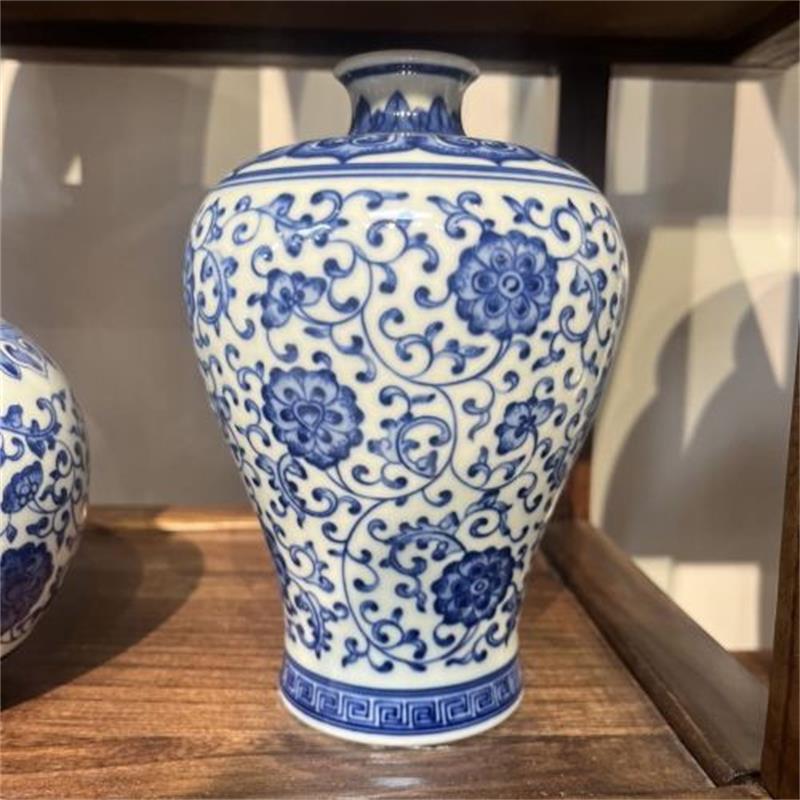
Hand-Painted Ceramic Plum Lotus Vase | Artisanal Decor
-
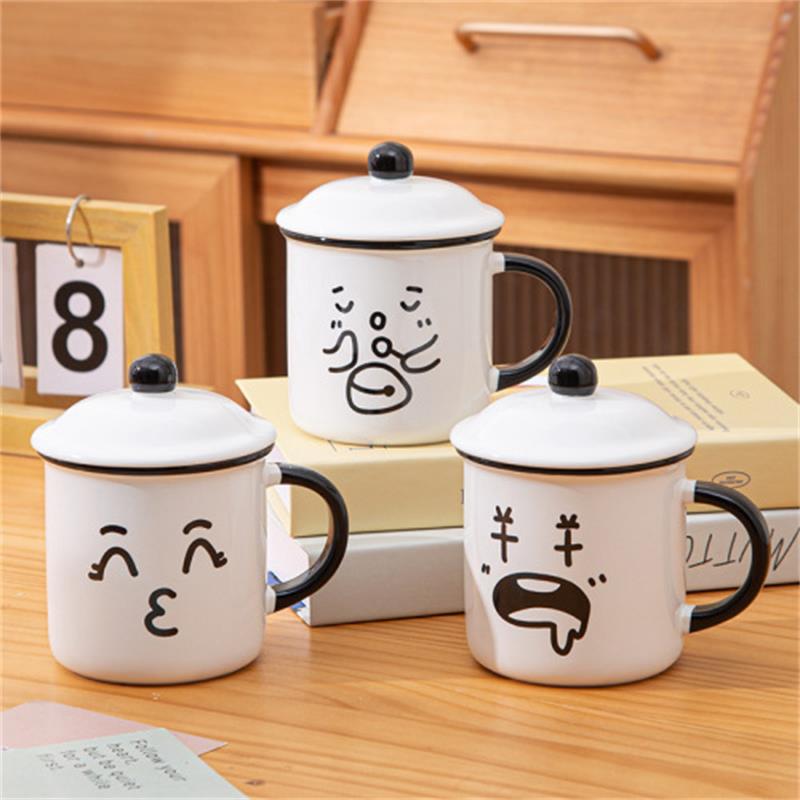
Quirky Ceramic Mug with Lid | Fun Unique Gift & Desk Decor
-
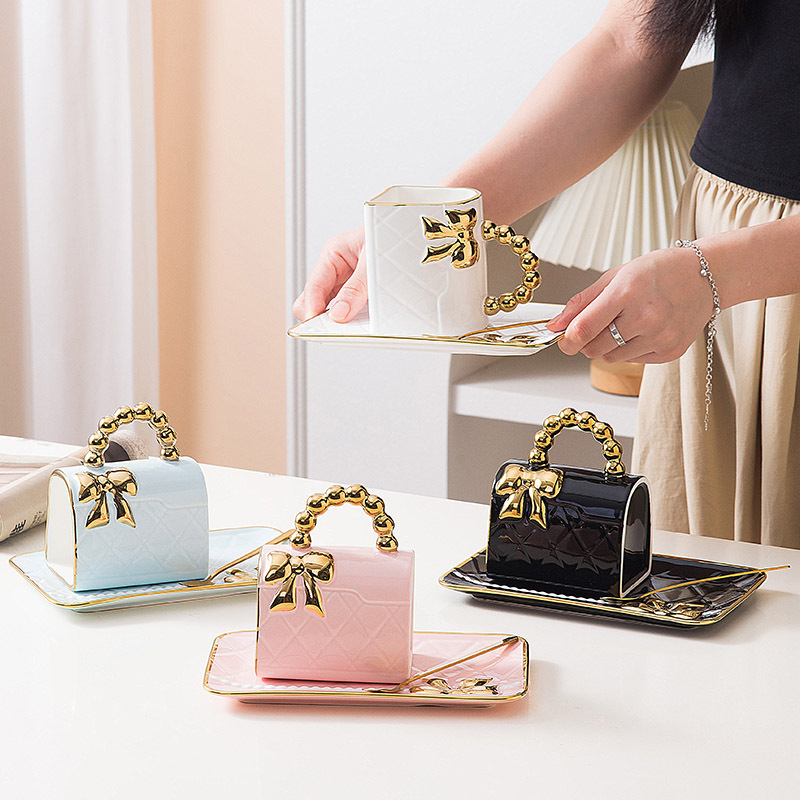
Handcrafted Ceramic Bow Bag Mug | Cozy Home Decor Gift
-
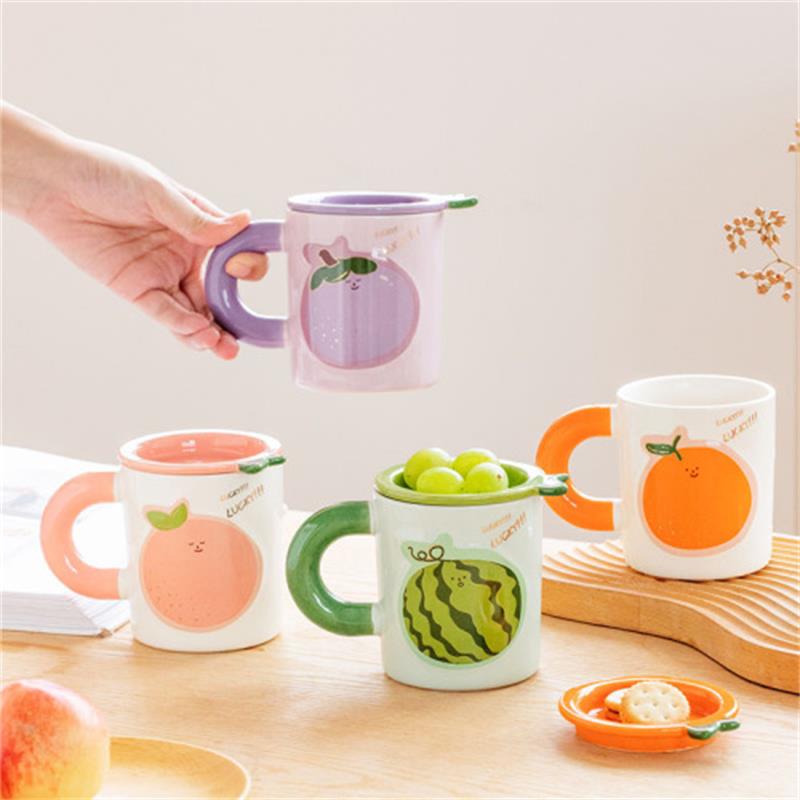
Fruit-Patterned Ceramic Mug | Handcrafted Cozy Home Decor
-
Handcrafted Santa Ceramic Mug | Cozy Home Decor & Gift
-
Handcrafted Ceramic Rabbit Mug for Cozy Home Decor