
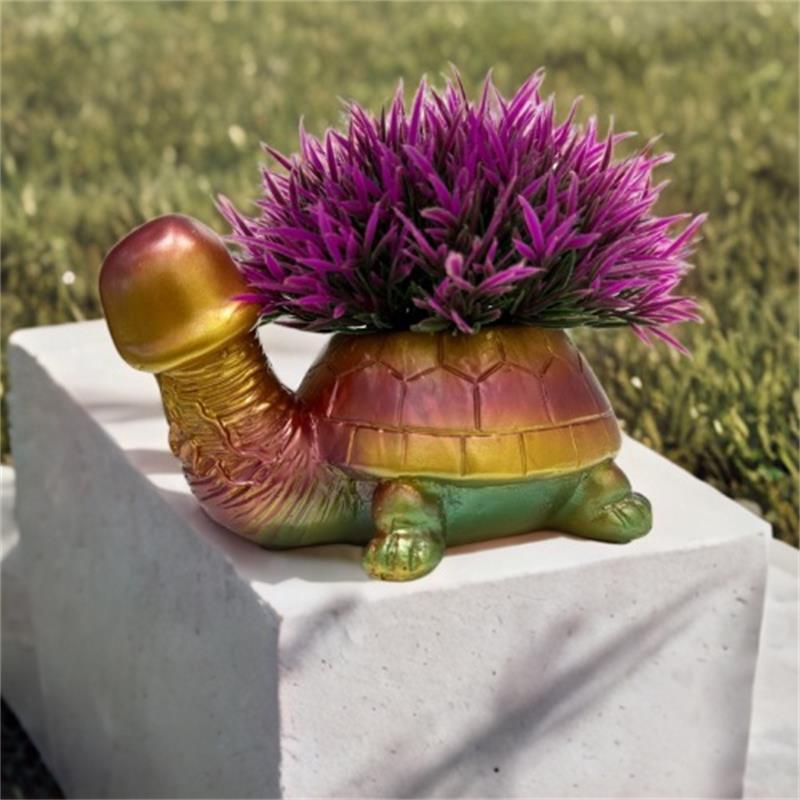
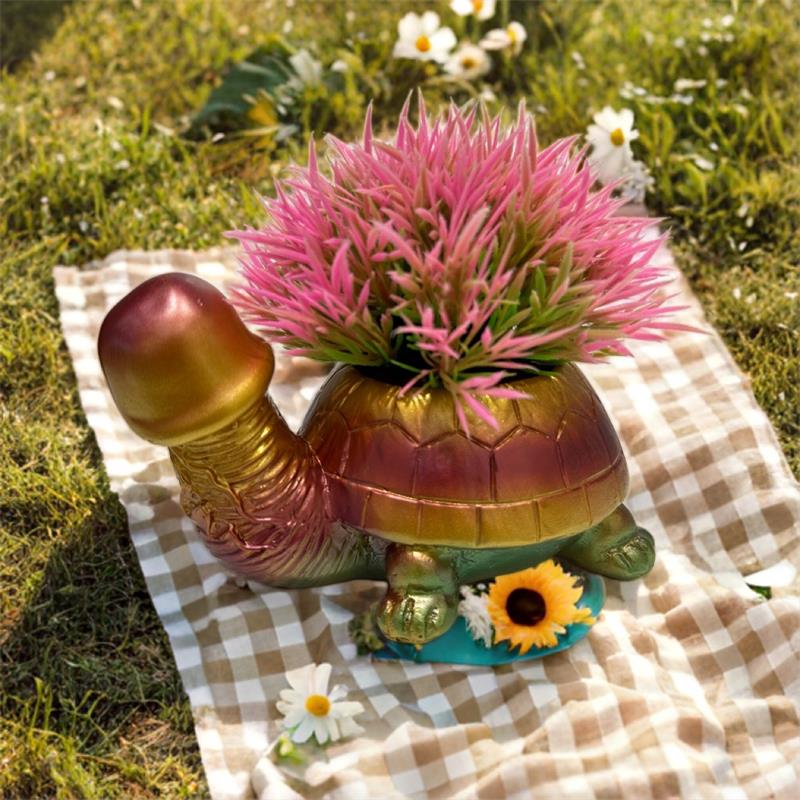
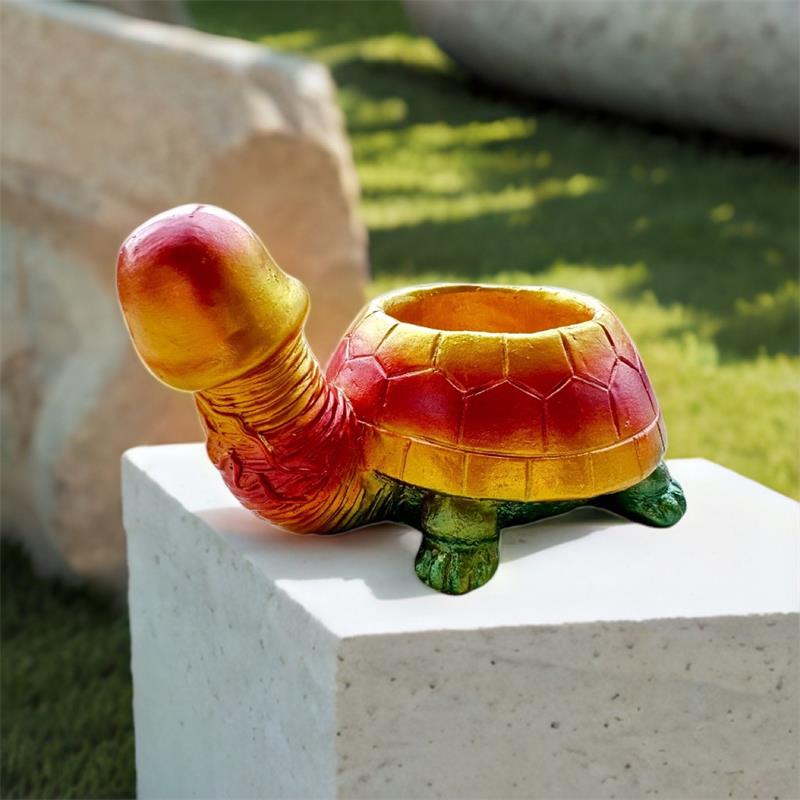
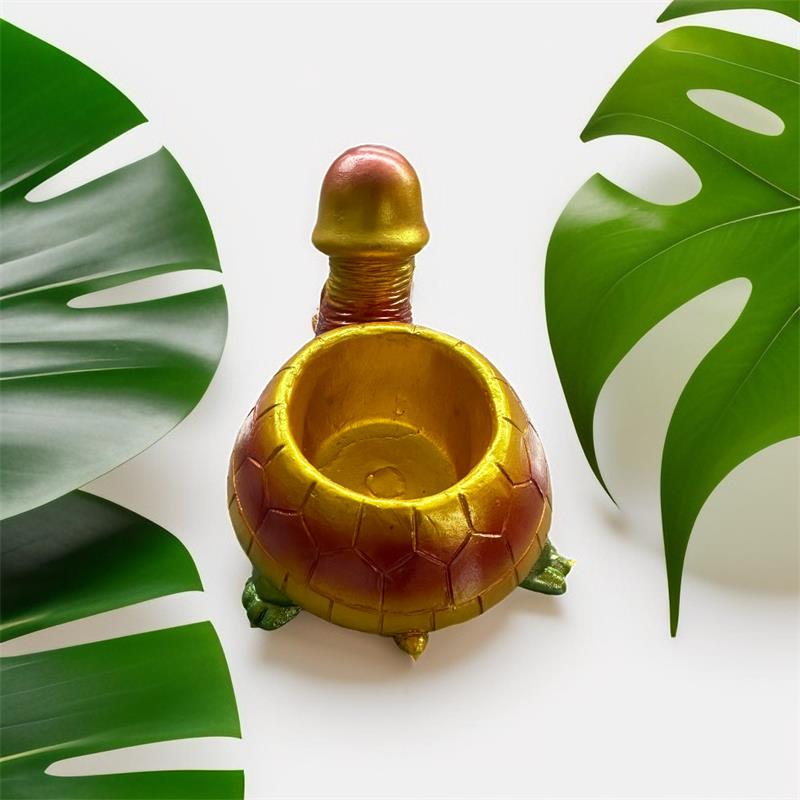
Turtle Resin Planter | Minimalist Home Decor Accent
The Turtle That Never Hurries
There is a corner of the room that asks for nothing. A windowsill. A shelf beside the door. The flat space on a desk where the eye lands when the mind needs a pause. These places do not shout. They wait.
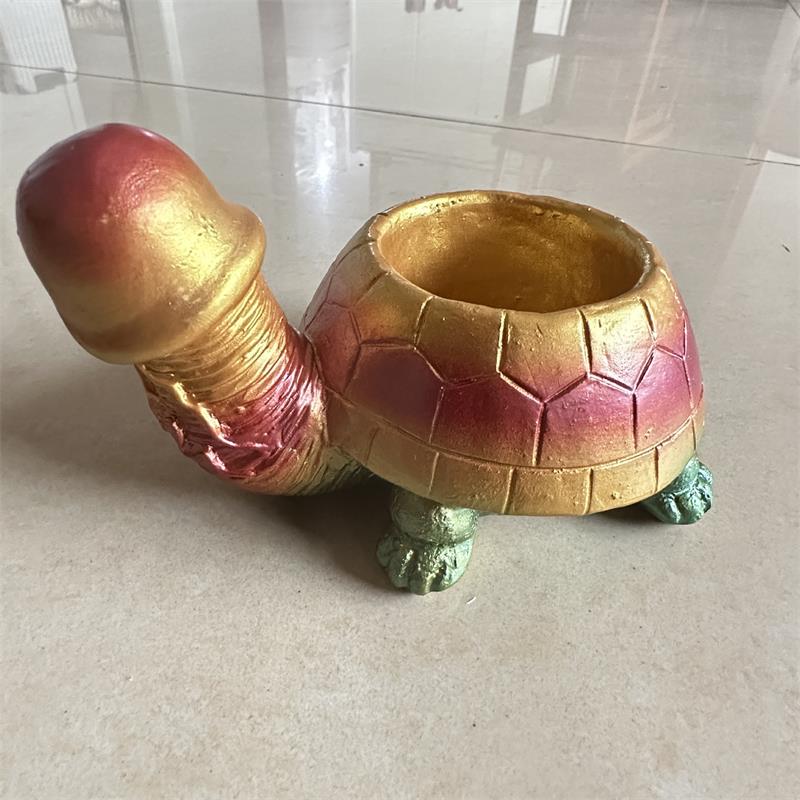
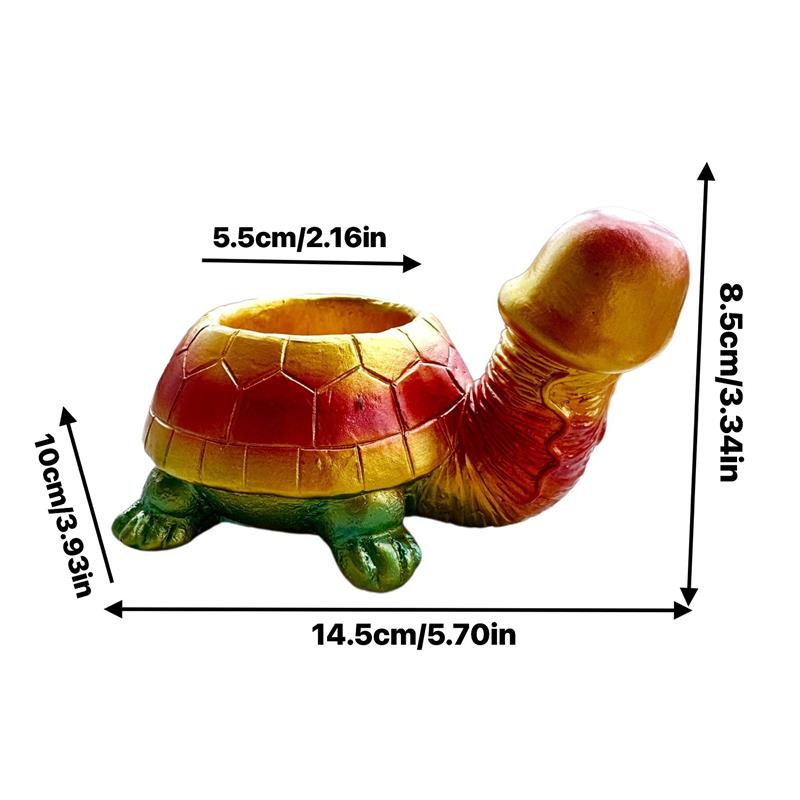
The turtle arrives in matte resin, warm to the touch, 16 centimeters across and 11 high. It weighs almost nothing in the hand, yet it holds its ground. A shell curved like a river stone. A head lifted just enough to suggest attention. No gloss. No noise. Only form.
You place it on the sill. You do not fill it right away. That is part of the point.
Days pass. The turtle sits. Morning light moves across the shell and leaves. Dust does not settle on it the way it settles on plastic. Resin has a stillness that feels earned, not manufactured. It belongs to the same family as clay and stone, but it is lighter, kinder to a shelf that was never meant to bear weight.
Then one afternoon you bring a small succulent home. A jade plant, maybe. Or a cutting of pothos that has been rooting in a glass of water for weeks. You set it into the turtle’s back, where the shell opens into a shallow basin. The plant sits low. The turtle does not complain. It simply becomes a different thing: a living object, a quiet host.
This is not a planter that demands attention. It is a planter that rewards the second glance. The first time you see it, you think: turtle. The second time, you think: home.
Minimalists understand this. The best decor is not the piece that fills a room. It is the piece that gives the room permission to breathe. A single turtle on a console table does more than a shelf of matching vases. It creates a focal point without effort. It says: someone lives here who knows when to stop.
The resin is smooth, not slick. It catches light without throwing it back. In a white room, it reads as shadow and warmth. In a dark room, it reads as a small, steady presence. On a bedside table, it holds a tiny plant and a pair of glasses. In a bathroom, it holds a bar of soap. On a desk, it holds nothing at all, and that is enough.
Gift it to someone who is moving into a first apartment. Gift it to someone who has everything and wants less. Gift it to a friend who keeps a garden on a fire escape and dreams of a real one. The turtle does not need instructions. It does not need water. It does not need to be explained.
It is 16 by 16 by 11 centimeters. It weighs what a small book weighs. It is made of resin, which means it will not crack in winter or fade in summer. It will not ask for a coaster. It will not tip over when the window is open. It is, in the quietest way, reliable.
There is a word for this kind of object: companion. Not because it moves or speaks, but because it stays. It stays through seasons. It stays through moods. It stays when the plant dies and is replaced, and when the plant thrives and becomes too big for the shell. The turtle remains. The turtle waits.
This is the opposite of fast decor. Fast decor is bought in a hurry and forgotten in a week. The turtle is bought slowly, placed carefully, and noticed for years. It does not trend. It does not need to. It simply is.
So find the corner that asks for nothing. Set the turtle there. Let it hold a plant, or a candle, or a set of keys. Let it hold the light. Let it hold the quiet. In a world that hurries, the turtle does not. That is its entire gift.
Leave Your Message
Related PRODUCTS
-
Minimalist Elephant Resin Sculpture | Artisanal Home Decor
-
Pair of Rabbit Resin Ornament | Warm Handcrafted Home Decor Gift
-
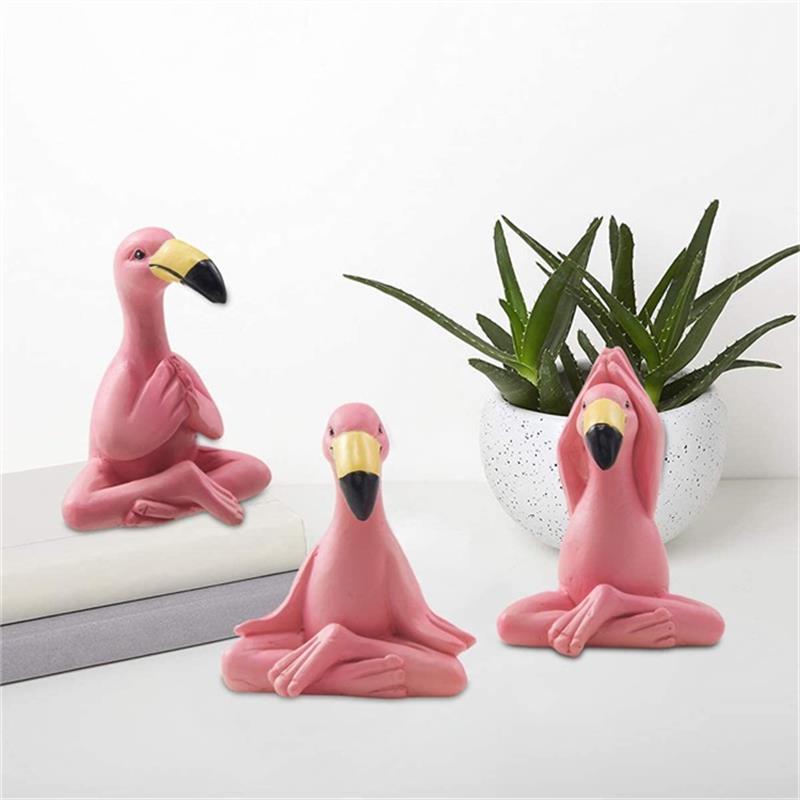
Mini Flamingo Yoga Statue | Calming Resin Desk Decor
-
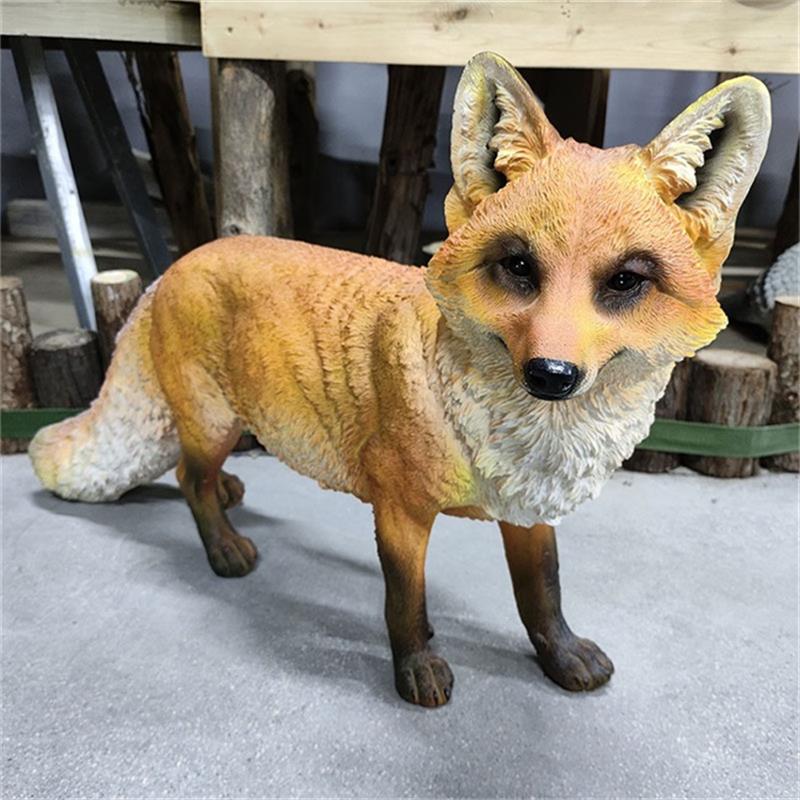
Resin Fox Garden Sculpture – A Story-Driven Home Accent
-
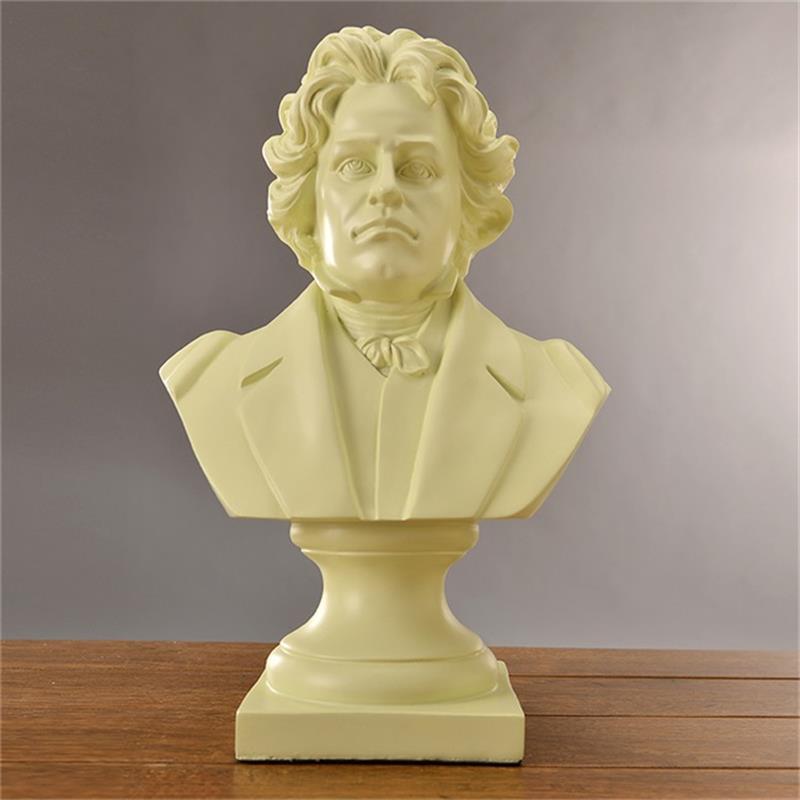
Beethoven Resin Bust – A Heartwarming Home Accent Gift
-
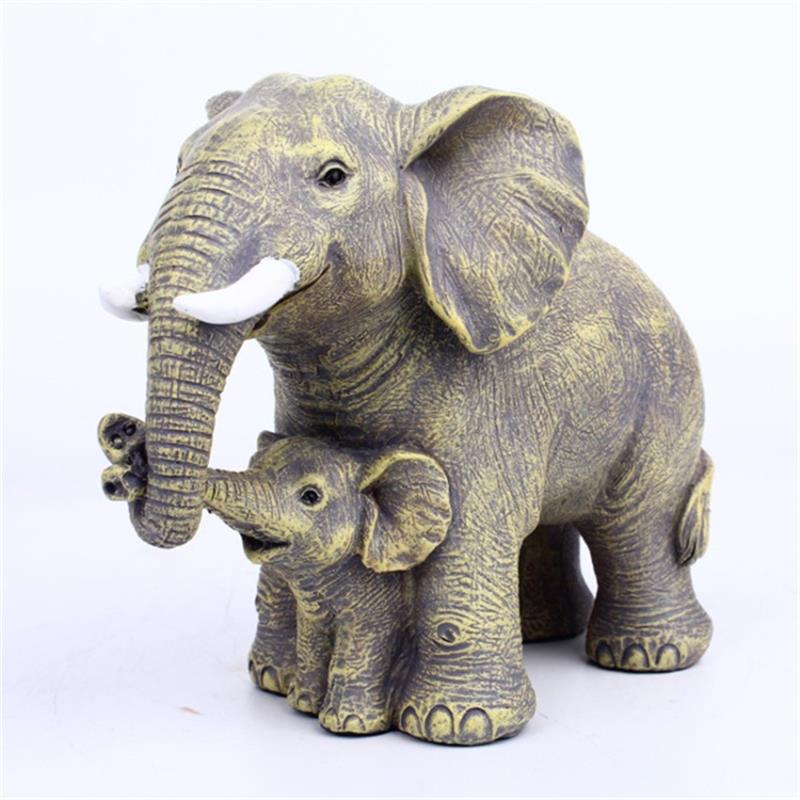
Mother & Child Elephant Sculpture | Minimalist Resin Decor