3-Inch Light Bulb Core Mini Clock Shape Plasma Ball Decorative Object
Some decorative objects sit quietly. Others demand attention the moment someone walks into the room. The 3-inch plasma ball lamp falls firmly into the second category.
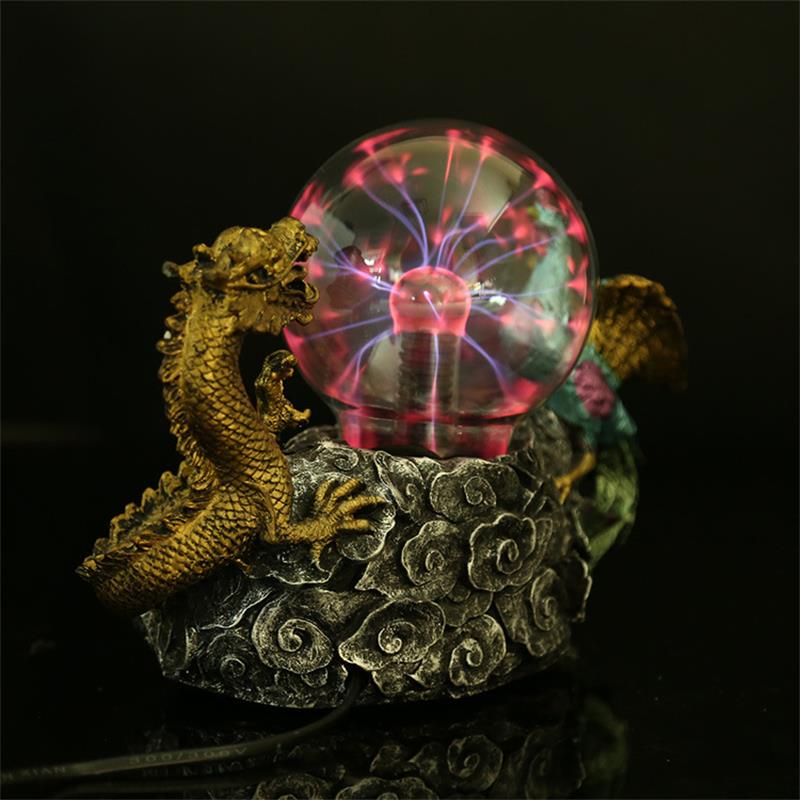
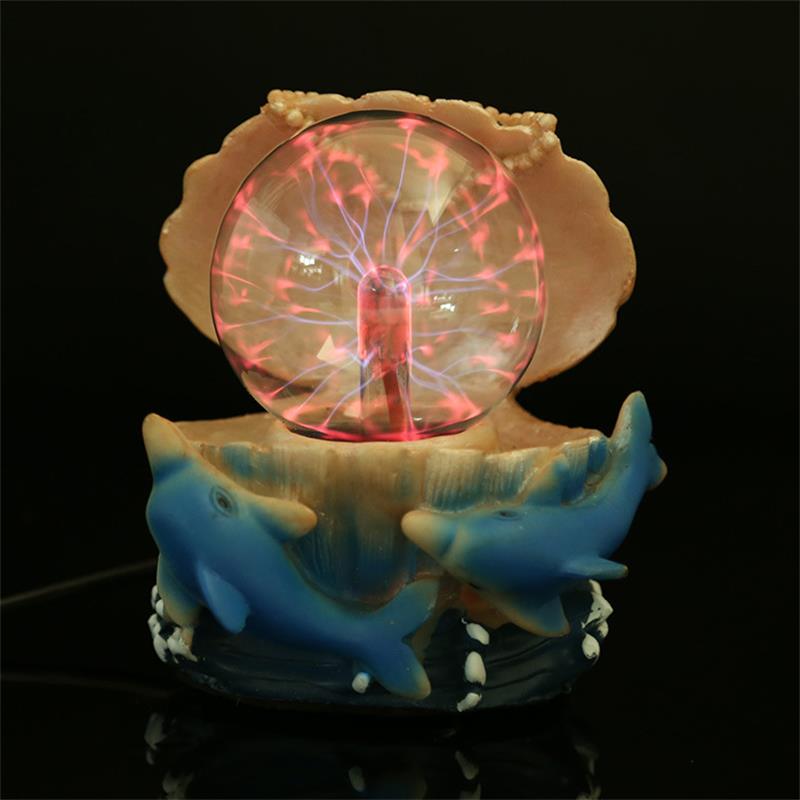
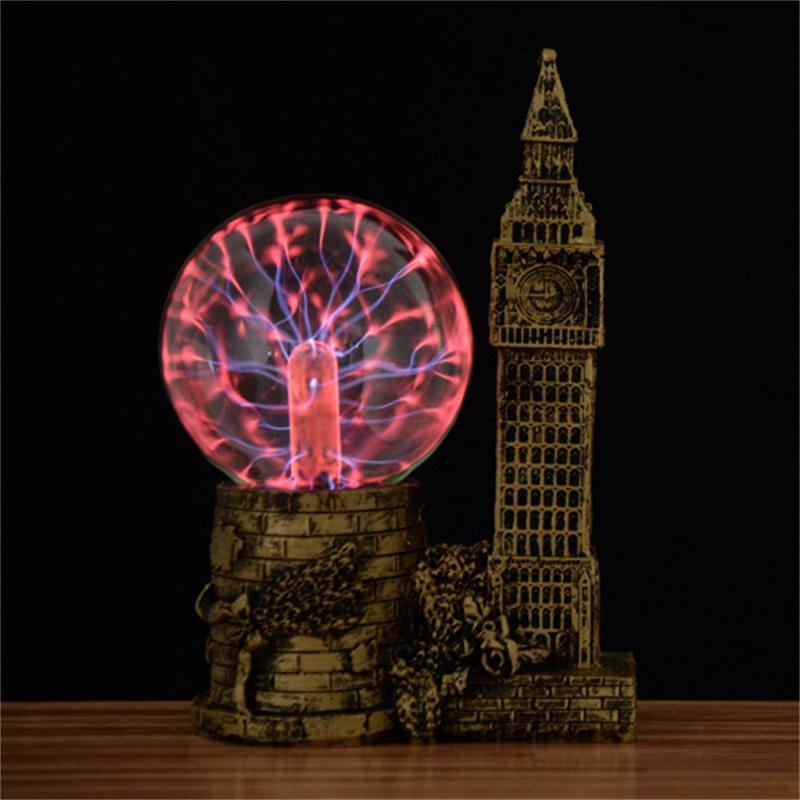
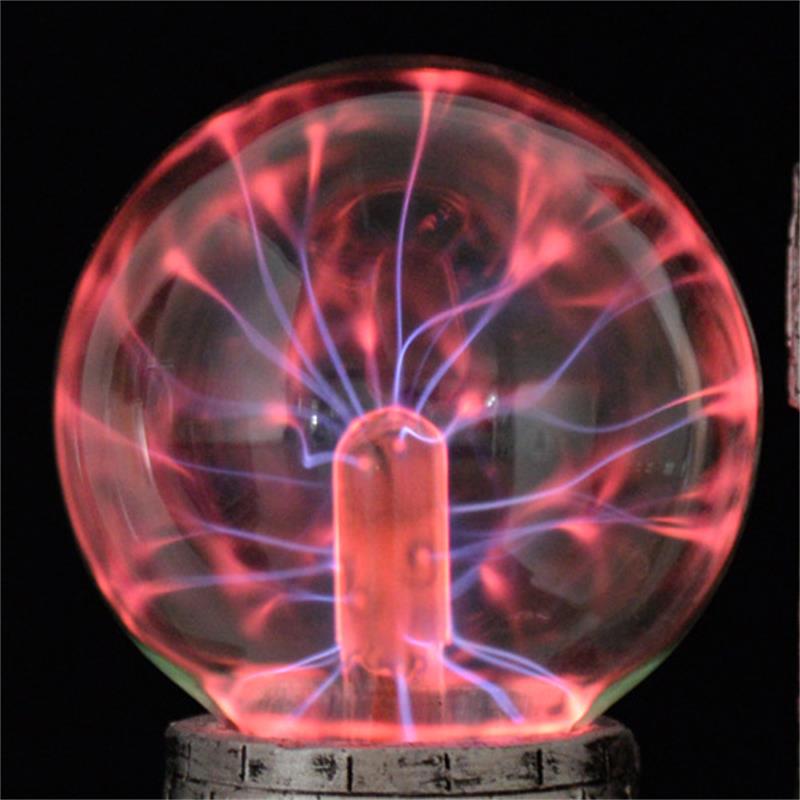
At first glance, it reads as a compact sculptural piece—a glass sphere perched on a small base, roughly the size of a generous paperweight. Switch it on, and the interior transforms. Thin, branching filaments of light arc from a central electrode toward the glass, shifting and intensifying when a fingertip touches the surface. It is, in the most literal sense, a contained storm.
This is not a lamp in the traditional sense. You will not rely on it to read by. Its purpose is atmospheric: to draw the eye, spark curiosity, and give a small corner of a room a sense of movement and life. That combination of visual drama and compact scale is why the plasma ball has quietly held a place in decor and gift culture for decades—and why it continues to show up in searches for unusual desk accents and memorable housewarming presents.
It appeals to a specific type of buyer: someone who wants decor that does something. A homeowner looking for a single point of interest on a console table. An office worker who wants their desk to feel less institutional. A gift-giver hunting for something that won’t be immediately forgotten. The plasma ball works for all of them because it occupies a rare middle ground—technical enough to fascinate, small enough to fit almost anywhere, and visually striking enough to justify its presence even when it is not the centerpiece of a room.
What Is This Product
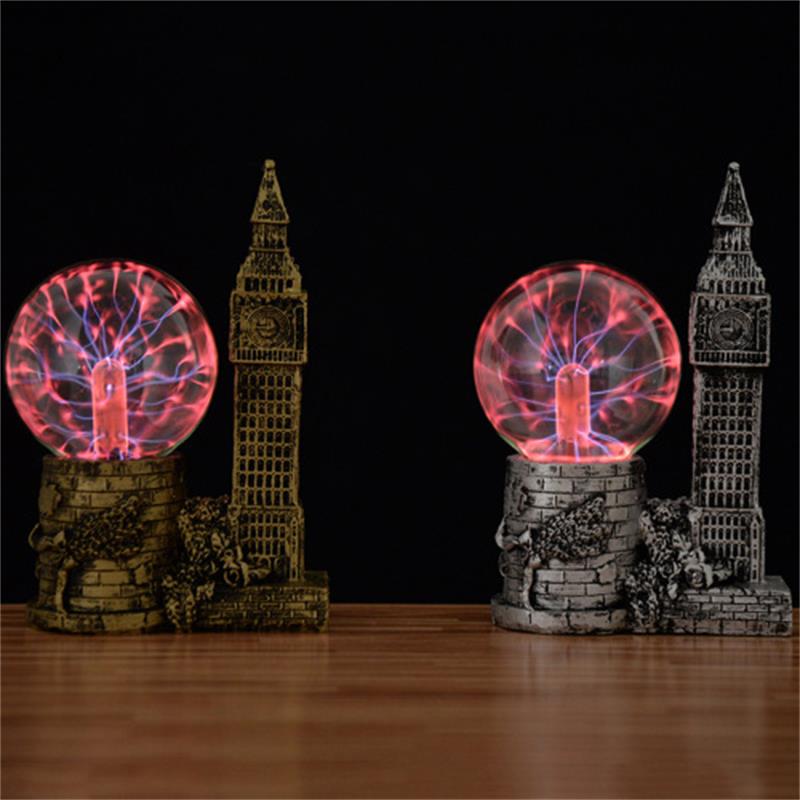
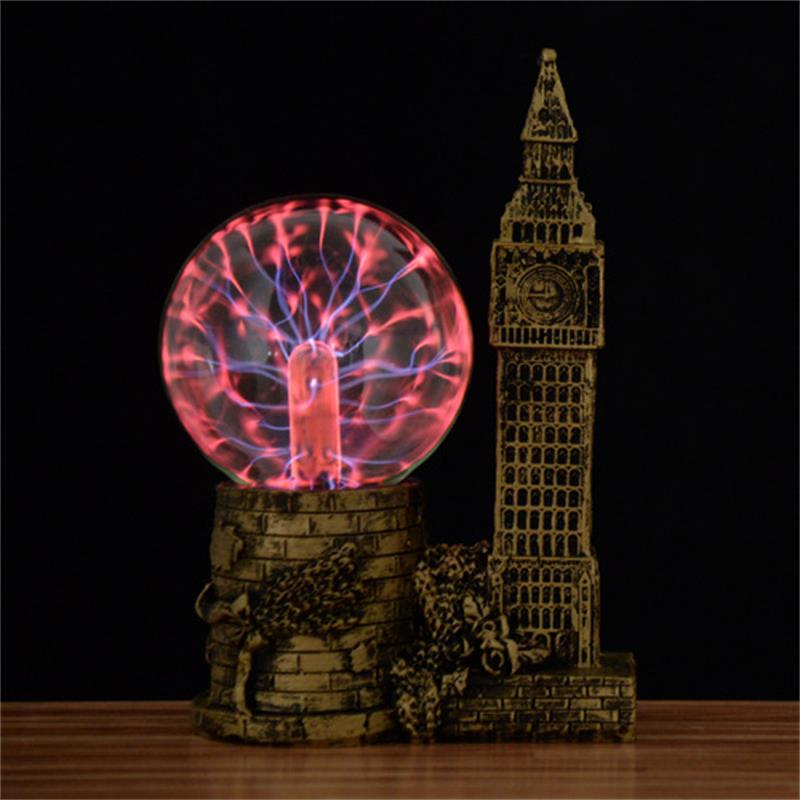
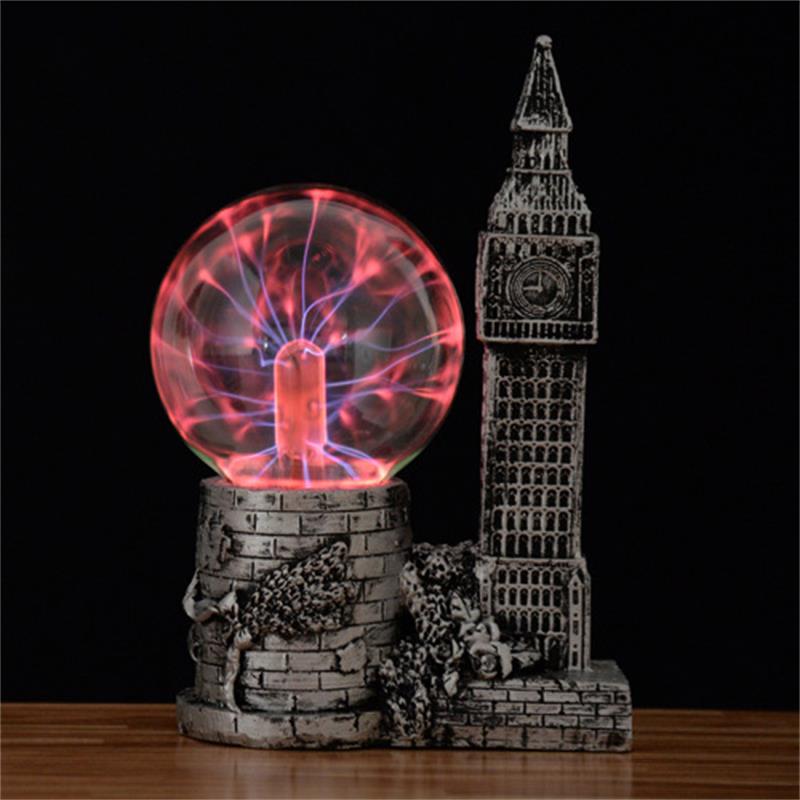
At its simplest, this is a miniature plasma globe housed in clear glass, mounted on a small base. The “mini clock shape” in the product name refers to the overall silhouette—a rounded upper section atop a narrow stem or base, creating a profile that reads as a tiny timepiece or bell-like form rather than the more common spherical globe on a flat base.
The functional core is a plasma discharge system. Inside the glass, a central electrode sits at the middle of the sphere. When powered, a high-frequency electrical field ionizes the gas inside the glass, creating the glowing tendrils of light. Touch the glass, and the electrical field changes—the filaments concentrate and brighten at the point of contact, following your finger as you move it across the surface.
What it is not: This is not a toy for young children. It is not a primary light source. It is not an air purifier, despite some marketing language that occasionally attaches negative-ion claims to plasma products.
What it is: A compact, interactive decorative object that produces a continuously shifting light display. It is powered via USB or battery, depending on the specific unit, and intended for indoor display on a stable surface.
Because the product is available under many generic listings rather than a single branded line, exact specifications vary. Materials typically include a glass sphere and an ABS or resin base. Dimensions for a 3-inch unit generally fall in the range of 10–14 cm in height and 7–8 cm in diameter, though buyers should confirm measurements with the specific seller. The base design is where the “clock shape” differentiation becomes most visible—some units emphasize a stem-like lower profile that distinguishes it from flat-based globes.
Where Can It Be Used
The compact footprint of a 3-inch plasma ball makes it unusually adaptable. Unlike larger globes that require dedicated tabletop space, this size can slot into corners, shelves, and surfaces where a larger lamp would feel intrusive.
Home Decoration
Living Room: On a side table near a seating area, the plasma ball becomes a quiet focal point—something the eye returns to during conversation. It works especially well on dark wood or matte surfaces where the light arcs have contrast.
Bedroom: As a night-time accent rather than a reading lamp. Placed on a nightstand or dresser, the shifting light adds a low-level ambient glow without flooding the room. Many users treat it as a “wind-down” object: something to watch rather than scroll past.
Bookshelf and Floating Shelf: This is arguably its strongest placement. Between stacks of books or beside a few curated objects, the plasma ball adds motion and light to an otherwise static arrangement. Its small scale means it doesn’t dominate the shelf—it punctuates it.
TV Cabinet and Console Table: On a low console beneath a wall-mounted TV, a plasma ball offers a counterpoint to the screen when the TV is off. It gives the surface a reason to exist visually even when not in active use.
Entryway: A small, unusual object on an entryway table signals something about the household before a guest even sits down. The plasma ball reads as curious, modern, and slightly unexpected.
Display Cabinet and Collection Showcase: For people who already collect interesting objects, a plasma ball fits naturally into a rotating display. It doesn’t compete with other pieces—it adds a different texture of light and interaction.
Office and Workspace
Office Desk: A desk is a personal territory within a shared space. A plasma ball on the corner of a desk gives the workspace a small pocket of personality. It is also a natural conversation starter with colleagues who stop by.
Reception Area: In a waiting area or reception desk, the plasma ball functions as a low-stakes distraction—something for visitors to look at while they wait. It reads as more intentional than a stack of magazines and less expensive than art.
Commercial Settings
Retail Store and Counter Display: On a checkout counter or display case, a plasma ball draws the eye through movement. Retail environments benefit from objects that make people pause, and the touch-response element invites engagement.
Coffee Shop and Restaurant: On a bar top or at the end of a counter, a small plasma ball adds warmth and curiosity without requiring much space. It fits the “third place” aesthetic—familiar but slightly unusual.
Hotel Lobby: On a side table or console in a boutique hotel or guesthouse lobby, the plasma ball contributes to a sense of design-forward hospitality. It suggests the space was styled rather than merely furnished.
Showroom and Model Room: In interior design showrooms or model apartments, small interactive objects help visitors imagine how a space might feel lived-in. A plasma ball adds a layer of personality to a staged environment.
Gift Ideas
Some gifts are practical. Some are memorable. The plasma ball leans toward the latter, which makes it useful for occasions where you want to give something that will actually be used and looked at rather than stored in a drawer.
Birthday (Adults and Teens): For someone who appreciates tech-adjacent decor, science fiction, or unusual objects, a plasma ball is a low-risk gift. It doesn’t require the recipient to have a specific hobby—it just needs them to enjoy having something interesting on a shelf.
Housewarming: A small, self-contained decorative object is easier to give than something that requires wall space or assembly. The plasma ball arrives ready to place, and its compact size means it will find a spot in most homes.
Christmas and Holiday Gifting: The plasma ball has a natural association with light and wonder that fits the holiday season. It can function as a “stocking stuffer plus”—small enough to wrap easily, substantial enough to feel like a real gift.
Mother’s Day and Father’s Day: These occasions often default to predictable categories. A plasma ball works as a gift for a parent who enjoys having interesting objects around, regardless of gender.
Anniversary: For couples who appreciate design or novelty, a plasma ball can serve as a small, symbolic gift—something that captures attention and shifts over time, not unlike the relationship itself.
Business and Corporate Gifting: For clients, colleagues, or employees, a plasma ball is a desk-appropriate gift that doesn’t cross professional boundaries. It is distinctive without being personal, and it occupies a space on a desk that would otherwise be empty.
Festival Gifting: Beyond Christmas, plasma balls work for occasions like Diwali, Lunar New Year, or any celebration where light and novelty are welcome.
Commercial Applications
The 3-inch plasma ball’s commercial value lies in its ability to create engagement in small spaces. It is not a signage solution or a major lighting installation. It is a detail—and details are what make commercial spaces feel designed rather than default.
Retail Display: On a counter or within a display case, the plasma ball adds a point of motion. In a store full of static products, anything that moves draws attention. The touch-response feature invites customers to interact, which increases dwell time near the display.
Hotel Decoration: Boutique hotels and guesthouses often rely on small, distinctive objects to differentiate their spaces from chain properties. A plasma ball on a lobby table or in a guest room adds a layer of personality that costs relatively little.
Restaurant Decoration: On a bar top or a host stand, the plasma ball contributes to the atmosphere without taking up functional space. It reads as a deliberate styling choice.
Office Reception and Showroom: In professional environments where decor tends toward the neutral, a plasma ball introduces a small element of play. It gives visitors something to look at and signals that the space has a human behind it.
Model Room and Interior Decoration Projects: Interior designers working on staged environments can use plasma balls as small accent pieces that add life to a surface. They work especially well in youth-oriented or tech-focused spaces.
Why People Love It
Visual Beauty
The plasma ball’s core appeal is visual. The filaments of light are unpredictable—they shift, branch, and flicker in ways that feel organic despite being electrically generated. In a dark room, the effect is amplified: the sphere becomes a self-contained light show, small but intense. It is the kind of object that rewards a second look, then a third, because the pattern is never quite the same.
Art and Science Intersection
The plasma ball sits at an unusual intersection: it is both an art object and a demonstration of physics. The light you see is ionized gas responding to an electrical field. Touching the glass changes the field, and the light responds. That layering of beauty and mechanism appeals to people who like their decor to have a story.
Spatial Atmosphere
A plasma ball doesn’t light a room—it changes the feeling of a small area. On a dark shelf or a dim corner, it creates a pocket of energy and warmth. It gives surfaces a sense of life that static objects cannot provide.
Collectibility
Plasma balls have been produced in various sizes, shapes, and base designs for decades. The 3-inch clock-shape variant is one expression of a broader category. For collectors of novelty lighting or retro-tech objects, it fits into an existing interest. For casual buyers, it is a single, self-contained piece rather than the start of a collection.
Gift Value
The plasma ball is a reliable gift because it doesn’t require the recipient to have a declared interest. It is visually interesting to almost anyone, and its function is immediately apparent. It also occupies a price range that makes it feel like a thoughtful gesture without being an obligation.
Display Value
On a shelf or desk, the plasma ball earns its space. It is small enough to place almost anywhere, visually distinctive enough to justify its presence, and interactive enough to invite engagement. It does not need to be the centerpiece of a room—it works as a detail that adds depth to an arrangement.
Frequently Asked Questions
Is this plasma ball safe to touch?
Yes. The electrical current inside the glass is low and isolated. Touching the exterior of the glass is the intended way to interact with the object. The light responds to your touch without any risk of shock.
Can it be left on continuously?
Most manufacturers recommend limiting continuous use to 1–2 hours at a time. The glass and base can warm up during operation, and giving the unit periodic breaks helps extend its lifespan.
Does it work as a night light?
It can function as a low-level ambient light, but it is not designed to illuminate a room. Its light is concentrated within the sphere and is best appreciated in darker settings. For a night light, it works best as a decorative accent rather than a functional light source.
What power source does it use?
The 3-inch plasma ball is typically powered by USB or by batteries (often AAA), depending on the specific model. USB power is common and convenient for desk placement near a computer or power strip.
Can it be displayed in a bathroom or kitchen?
It is best kept in dry environments. Moisture near the glass or base is not ideal for the electrical components. A living room, bedroom, office, or dry commercial space is a better placement.
Does the “clock shape” mean it tells time?
No. The “clock shape” description refers to the silhouette—a rounded top section on a narrower base, resembling a small clock or bell. It is not a timepiece.
Is it a good gift for someone who isn’t “into tech”?
Yes, because the appeal is primarily visual. The plasma ball does not require the recipient to understand or care about how it works. Many people simply enjoy the way it looks and the way it responds to touch.
Can it be used in a retail or commercial space?
Yes, and it is particularly effective on counters, reception desks, and display surfaces where a small point of motion and light can draw attention. It is not weather-resistant, so indoor placement is recommended.
How should it be cleaned?
Turn off and unplug the unit first. Use a soft, dry or slightly damp cloth to wipe the exterior glass. Avoid spraying liquid directly onto the base or into any openings. Let the surface dry completely before powering it back on.
What makes it different from a standard plasma globe?
The primary difference is the form factor. The 3-inch clock-shape profile is more compact and stylized than the traditional spherical globe on a wide base. It reads as a decorative object with a specific silhouette rather than a generic “science toy.”
Will it interfere with other electronics?
Plasma balls operate at high frequency and can, in some cases, cause minor interference with sensitive equipment like certain radios or audio devices if placed too close. Keeping a modest distance (a foot or more) from such devices is a reasonable precaution.