Minimalist Demilitarized Tank Sculpture | Metal Decor
The Quiet Weight of Memory
Some objects announce themselves. Others simply wait.
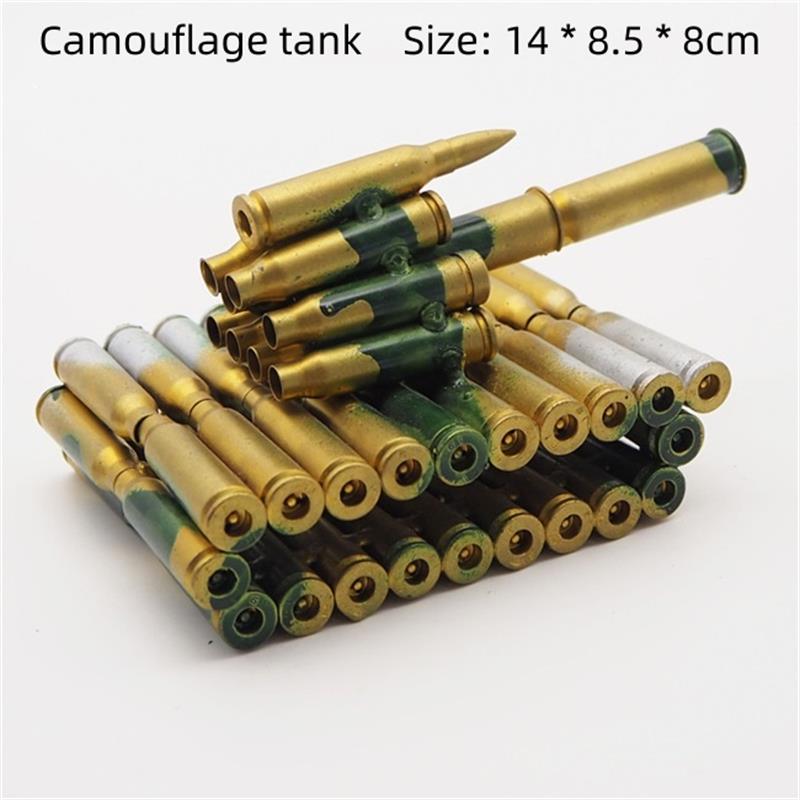
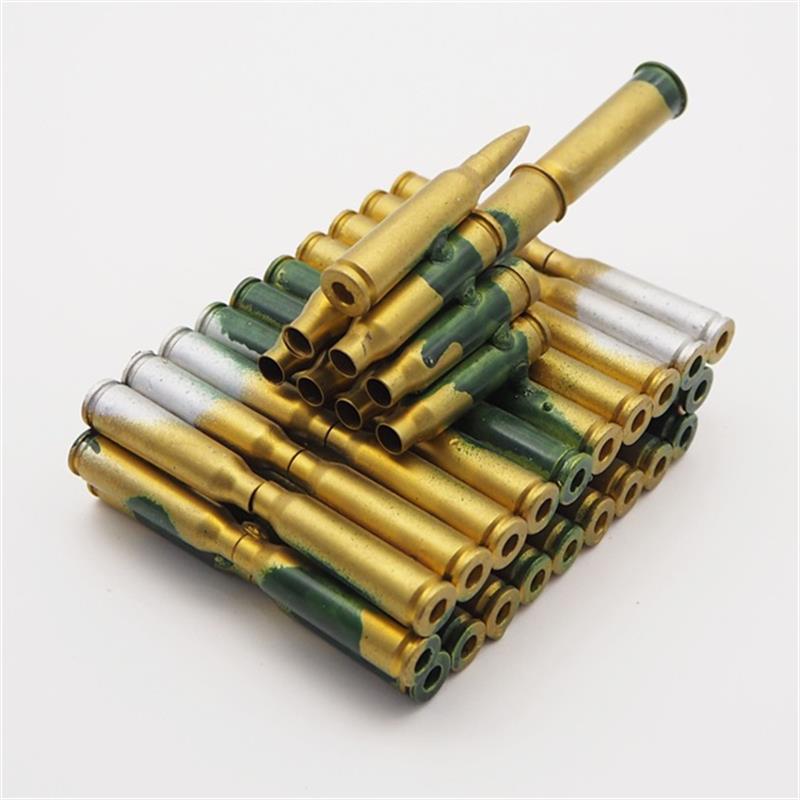
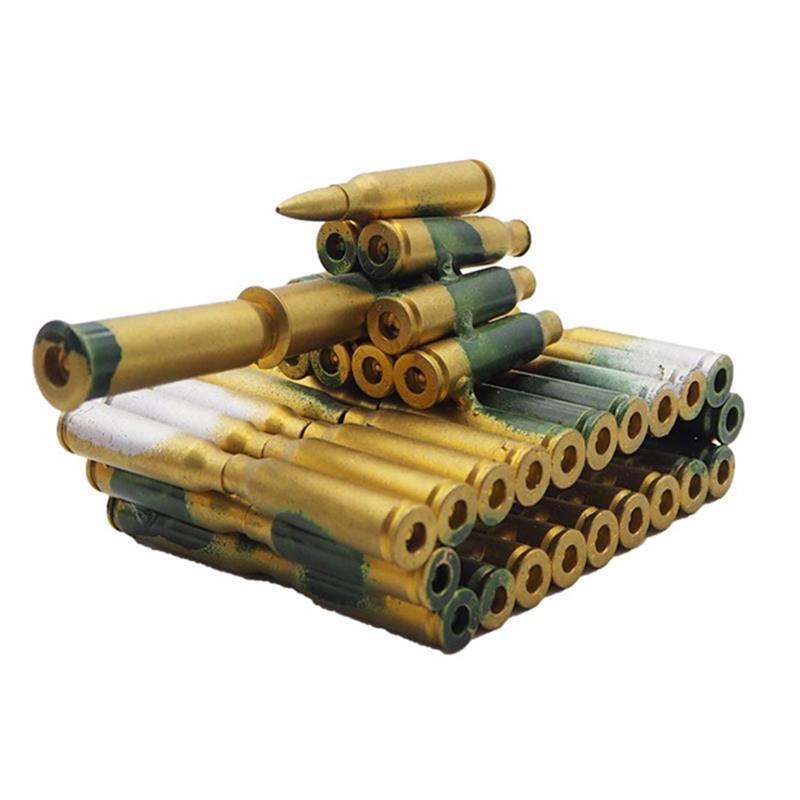
This one waits. A small demilitarized tank, no wheels, no motion, no noise. It rests at fourteen centimeters long, eight and a half wide, eight tall. It weighs what metal weighs when it has a past. You notice it not because it shouts, but because it holds still so completely that the room seems to arrange itself around it.
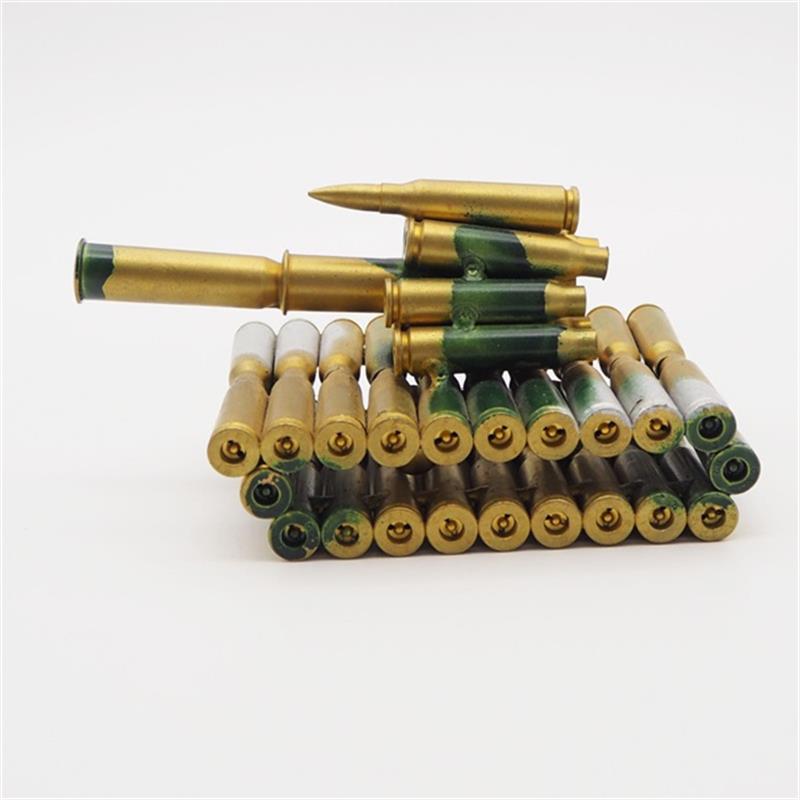
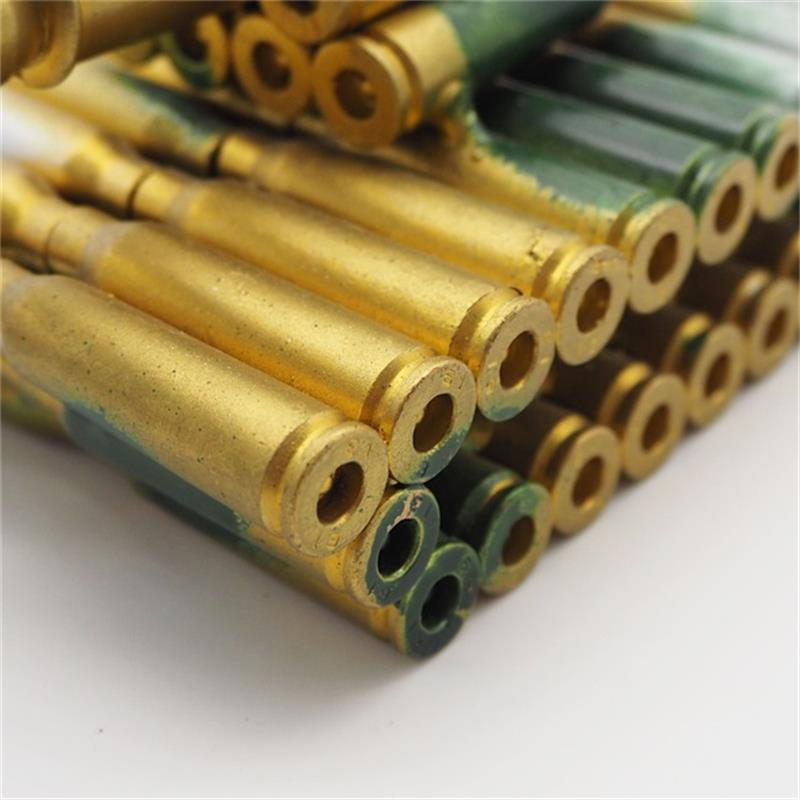
The tank is built from spent shell casings. That detail matters, though the piece never explains itself. The casings were once loud. They were once part of something urgent and violent. Now they are welded, shaped, sanded, and given a second life as something quiet. A form of armor without threat. A shape of war without war. The metal keeps its marks, faint seams, slight variations in tone, the small evidence of having been something else before. Nothing is hidden. Nothing is polished into false perfection. This is the aesthetic of honesty, and it asks for very little.
Place it on a low shelf. Place it on a desk near a window. Place it where the morning light can find the curve of the turret and the flat line of the hull. The shadows it casts are clean and angular. The metal does not reflect much. It absorbs. It sits in a minimal room the way a stone sits in a shallow stream, not interrupting, just present.
The appeal is not military. The appeal is restraint.
For the home decor buyer who has moved past clutter, this is a quiet anchor. It works in a study, a hallway console, a bookshelf with too much empty space. It does not demand a color scheme. It does not fight with a plant or a lamp or a stack of books. It simply occupies its small footprint with a certain gravity. Minimal decor is often described as empty. This piece suggests the opposite. Minimal is not empty. Minimal is deliberate. Every line here has been considered, every joint closed, every rough edge softened just enough.
For the buyer who collects objects with meaning, the tank offers a different kind of value. It is not a replica of a specific vehicle. It is not a model kit. It is a sculpture made from material that once had a completely different purpose. That transformation is the point. Spent casings become structure. Waste becomes form. The object carries a small, unresolved tension, and that tension is what makes it interesting to look at again and again. Collectors understand this. The best pieces are never the loudest ones. They are the ones that reward a second glance.
For the gift buyer, the piece is easy to give and hard to forget. It does not require explanation. It does not presume a hobby. It suits a father who likes clean lines, a friend who has recently simplified their apartment, a colleague who appreciates objects with a story but would never buy one for themselves. It arrives as a small, solid thing. It says nothing sentimental. It says, I chose this for you. That is often enough.
For the memorial buyer, the tank holds a different weight. It is not a monument. It is not a grave marker. It is a quiet keepsake, a way to hold a memory of service or loss without turning a room into a shrine. The metal is cool and steady. It does not ask for tears. It asks for a moment. Some people place a photograph beside it. Some leave it alone. Either way, it keeps its own counsel. Memorial objects work best when they are restrained, when they allow the living to continue living. This piece understands that.
For the corporate buyer, the sculpture offers something rare in commercial gifting. It is distinctive without being flashy. It is substantial without being heavy. It sits well on a reception desk, a conference table, a shelf in an office where the decor has been chosen with care. It suggests discipline, structure, and a certain quiet confidence. It does not need a plaque to be noticed. It does not need a speech. It simply sits there, and people ask about it. That conversation is the gift.
The dimensions are modest. Fourteen by eight and a half by eight centimeters. It fits in the hand, though it is not meant to be carried around. It fits on a windowsill without blocking the light. It fits in a bookshelf gap that has been waiting for the right object. The weight is real, the kind of weight that keeps a thing from sliding around when the door slams. This is a small detail, but it matters. Light objects feel temporary. This one feels placed.
The finish is matte, slightly textured, with the small tonal differences that come from welded metal. There is no chrome shine. There is no camouflage paint. The piece is not trying to look like a toy. It is trying to look like what it is, a careful assembly of spent material, shaped into a form that asks for calm. The aesthetic is quiet, industrial, and precise. It works in a minimal interior. It works in a warm interior. It works in a room that has not decided what it wants to be yet, because it does not impose.
Some objects are bought for a season. This one is bought for a shelf. It stays. It gathers a little dust. It gets wiped down. It becomes part of the room’s quiet architecture. Guests notice it eventually, usually after they have stopped noticing everything else. That is the highest compliment a minimal object can receive.
The tank does not move. It does not fire. It does not pretend. It holds the shape of something old and the material of something spent, and it turns both into a still, solid presence. That is the whole story. A quiet weight. A clean line. A small piece of metal that has learned to be still.